If you have ever watched a crew pull what looks like a furry raccoon out of a return duct, you already grasp the spirit of commercial duct cleaning. The job is part janitorial, part mechanical, part forensic. You open a system that has been inhaling a building for five or ten years, then you find out exactly what a building is made of. Dust, sure. Also gypsum, pollen, textile fiber, toner, the occasional paperclip, and in older facilities, enough construction debris to assemble a small, shabby birdhouse.
In the middle of that circus is filtration. Not the polite, disposables-in-the-air-handler kind, but industrial-grade capture of whatever the tools dislodge. HEPA sits at the center of that conversation, and while the term is plastered on a lot of gear, it is not window dressing. When you pair the right filtration chain with the right negative pressure and the right cleaning methods, you control where all that liberated particulate goes. If you get it wrong, you atomize a mess and redistribute it through a building, then everyone gets to experience duct cleaning twice.
What HEPA actually means, without the marketing perfume
In the United States, HEPA is a performance definition. A HEPA filter removes 99.97 percent of particles at 0.3 micrometer in diameter, the most penetrating particle size for typical fibrous filters. That 0.3 number is not a brag; it is the troublemaker size that is small enough to dodge inertia but not small enough to live purely in the land of diffusion. If a filter can net 99.97 percent at 0.3, it will usually do better at both larger and smaller sizes. Not every product that calls itself HEPA is actually tested to that threshold, so the documentation matters more than the label font.
European classifications sometimes use H13 or H14, which correspond to similar but not identical test methodologies and efficiencies. If your project lives under a spec that calls out H13 or H14, match the spec, not guesswork. If you operate in the U.S. Without a bespoke spec, look for independent test results at 0.3 micrometer with 99.97 percent or better capture. You want test data, not adjectives.
Why filtration decides whether the job helps or hurts
Duct cleaning is a simple bargain. You put the ductwork under negative pressure, agitate surfaces so debris leaves the metal, and you capture the debris before it leaves the containment zone. Operators rely on negative air machines and large portable vacuums to generate suction, and they route all exhaust through a filtration train that ends in HEPA. If the final stage is anything less, you risk turning your workspace into a snow globe.
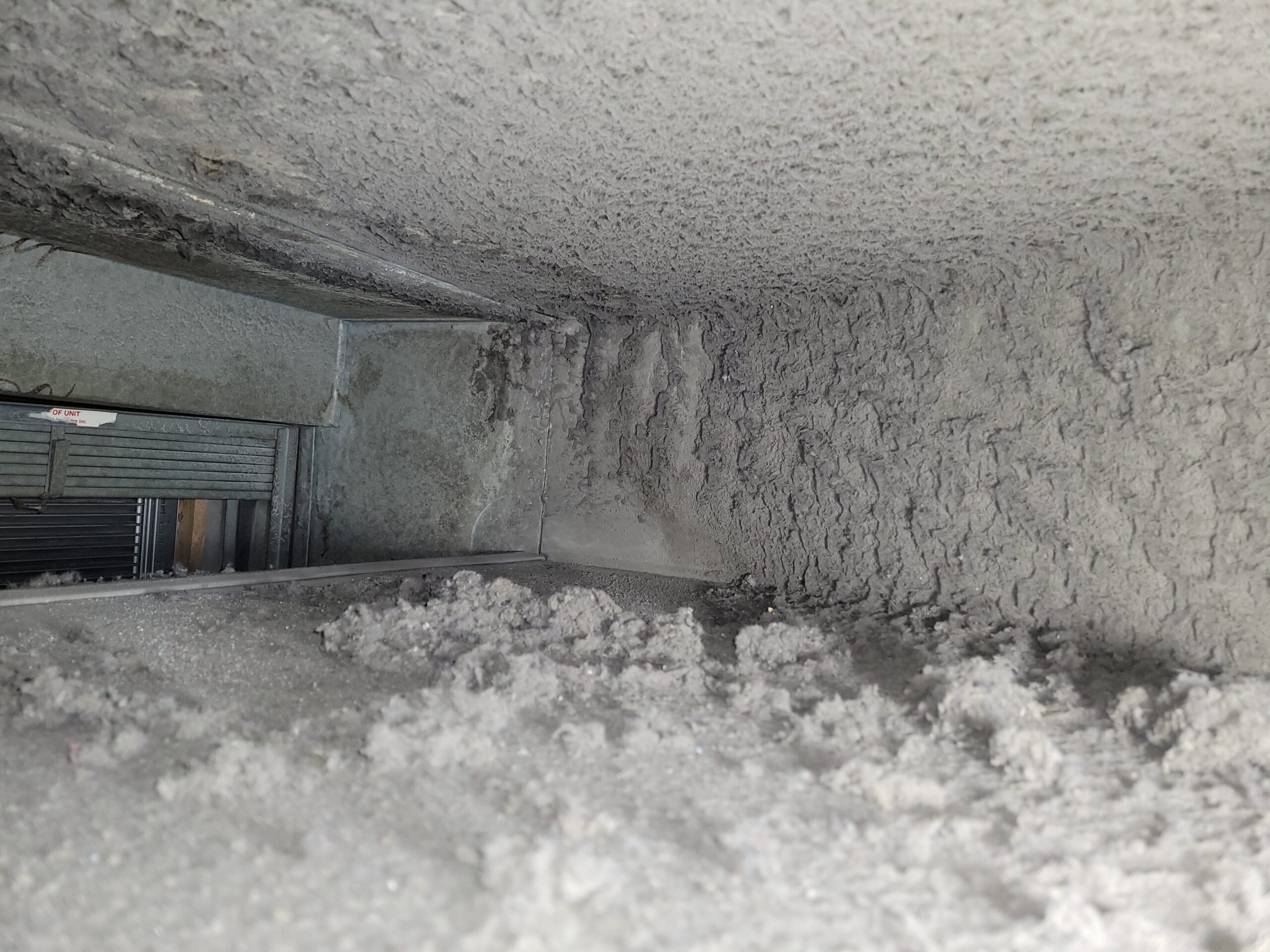
Two subtle truths drive the day. First, airflow is a jealous variable. The more restrictive your filtration, the more motor work you need to move useful cfm. Second, particle loading changes equipment behavior by the hour. As prefilters cake over, system resistance climbs, and what started as a happy 2,000 cfm of pull dwindles. Crew leads who watch their manometer and magnehelic gauge tend to get clean ducts and boring punch lists. Crew leads who ignore pressure drop reinvent the concept of confetti.
The filtration chain, from coarse grit to respirable haze
For commercial duct cleaning, you are not filtering supply air for tenants, you are filtering debris from a portable or truck-mounted vacuum. That vacuum’s outlet should never vent back into the building unless the last stage is verified HEPA, and even then, local rules or project specs might require ducting the exhaust outdoors.
A sane filtration chain works like a sieve that graduates from burly to precise. Construction reality puts a lot of strain on that first stage. If you feed a HEPA final with raw duct debris, you get to buy a lot of HEPA filters. A three-stage chain is common: a coarse prefilter for big hair and lint, a higher efficiency intermediate filter that traps the bulk of fine dust, and the HEPA at the end that scrubs the troublemakers. Some negative air machines use bag filters in the middle, others use rigid cartridges. Any of them can work if they are sized for the airflow and changed before they turn to concrete.
Your building’s HVAC filtration is part of the story too. Facilities often run MERV 8 to 13 in air handlers. That rating tells you nothing about your portable vacuum filters, but it does affect how much loose loading you will encounter in the ducts. Systems that have lived on MERV 8 with leaky return paths tend to feed your prefilters a hearty diet. Systems that run MERV 13 or better, and have decent housekeeping upstream, usually give you a cleaner starting point. I have opened returns in medical buildings that looked tidy after five years with MERV 13, and I have opened office towers on MERV 8 that could have supplied a diorama of a dusty Midwest farm.
Negative pressure and capture zones
The vacuum is your dragon. You want it hungry, not choking. On a typical branch, the goal is to place the suction collar in a way that captures the flight path of loosened debris. You cut two access points: one near the air handler and one at the far end of the run. The vacuum connects near the air handler side, while technicians agitate from the distal point, working back toward the suction. When air and debris have a straightforward path to the collector, you get one-pass cleaning with minimal blowback.
I like to see permanent duct access doors installed in places that will be cleaned again. They are not glamorous, but they save you from carving and patching the same spots every few years. On a large job, the duct map with access locations decides whether the day hums or drags.
Maintaining adequate negative pressure is not a fixed number. Duct geometry, tool choices, and how many branches are opened at once all adjust what “adequate” means. The practical habit is to measure. If the manometer across the final filter shows a sharp climb while tool performance drops, your bottleneck is not technique, it is filter loading.
The friendly feud: HEPA vs. MERV
HEPA and MERV do not compete; they operate in different universes. MERV rates HVAC filters in place within air handling systems, usually at 492 fpm test velocity and across a range of particle sizes. HEPA, in this context, is a terminal stage inside a dedicated cleaning device where velocity, housing, and face area are engineered so the filter does not become a brick.
If your facility manager asks, “We already run MERV 13, why do you need HEPA on the cleaning gear,” the answer is plain. The AHU filter protects the system during normal operation. It is not designed to inhale a week’s worth of mechanically dislodged debris at industrial velocities. During commercial duct cleaning, you are creating an artificial storm inside the ducts; HEPA on the vacuum is the umbrella that keeps the building dry.
How filters get tested, and why you should care
Not all HEPA filters are created equal. The real ones ship with individual test results. In industrial hygiene or cleanroom contexts, teams perform PAO (or legacy DOP) testing and scanning to verify the filter and its housing are leak-tight. For duct cleaning equipment, you will not be scheduling a certified field scan every time you roll a negative air machine through a lobby, but you should expect the manufacturer to provide test documentation and, ideally, a maintenance path that includes replacing gaskets or seals.
On higher risk projects, especially healthcare or food processing, I have seen owners require field verification with a particle counter upstream and downstream of the filter at operating flow. You are not trying to reproduce a lab test in a hallway, but you can catch a filter seated crooked, a missing gasket, or a cracked frame. A five-minute check at mobilization can save an uncomfortable call later.
Pressure drop, fan curves, and why your HEPA might be starving the tools
Filters resist airflow. That resistance is not abstract; it is a pressure drop that the blower must overcome. Portable vacuums and negative air machines come with a fan curve that shows how much volume they can move against a given static pressure. Add prefilters, intermediate filters, then a HEPA, and the curve becomes your math problem.
Here is how that looks in the field. You start the day with a clean set of filters and, say, 1.0 inch water column across the chain at your target cfm. After two hours of brushing fiberboard trunk lines in an old retail box, your coarse filter is a matted quilt, the pressure drop climbs to 1.6 inches, and the cfm falls off a cliff. Your brush sounds the same, but it no longer has the airflow behind it to carry debris to the collector. If you do not catch that, your team will keep working and you will collect less and less, while stirring more and more.
Change intervals are not a calendar event; they are decided by differential pressure and performance. Some crews set simple thresholds, such as change the prefilter when the drop across it rises by 0.3 to 0.5 inches, change the intermediate when the system drop climbs by around 1.0 inch above baseline, and reserve HEPA replacement for end of project unless a tear, gross bypass, or dramatic pressure spike appears. The specific numbers vary by machine and filter brand, but the logic holds.
A day on site: where HEPA earns its keep
Picture a midrise office building with ten floors, one AHU per floor, long rectangular trunk lines, mostly internally lined. The client complains about odor and bothersome dust in open office areas. The building runs MERV 10 on the handlers and has an economizer that pulls city grit on summer mornings.
We scheduled cleaning during off hours, set containment at mechanical rooms, and brought three negative air machines, each with a three-stage filtration train topped by HEPA. The plan called for progressive cleaning from the farthest branches back to the air handler, then coil and drain pan service.
A curious building engineer asked why we ducted the machine exhaust out a stairwell when the device had HEPA. The short answer: redundancy. A stairwell discharge avoids arguments if a filter fails and keeps the equipment heat out of occupied spaces. On a medical office floor we would have been obliged to do it that way; on a standard office floor, it was still smart politics.
The first hour, we watched pressure drop and added a prefilter change to the routine sooner than expected. The returns had a felt-like layer glued to the liner. Our brush and compressed air whips did their job. The filters took the beating we knew they would. Had we not been running a two-stage prefilter followed by HEPA, we would have clogged the final and lost the day. The result was uneventful in the best sense. No particulate in occupied spaces, measured improvement in return cleanliness, and, a week later, quieter tenant emails.

Choosing filtration equipment that will not make you swear
Here is a short checklist I give facility managers and contractors when they ask what to look for in the gear that makes or breaks commercial duct cleaning. Keep it boring and practical.
- Verified HEPA final stage with individual test data for 99.97 percent at 0.3 micrometer. A real prefilter and intermediate filter path with known pressure drops and easy changeout. Sealed housings with gasketing that survives repeated filter changes without curling or tearing. Published fan curve for the vacuum, so you can predict performance with loaded filters. Ports for pressure measurement, plus a readable gauge that your crew will actually watch.
What “clean” looks like, and how you prove it without poetry
The trade’s standard references call for visual inspection plus some quantifiable checks. Visual is not just shining a flashlight and declaring victory. Good crews document before and after conditions with photos of accessible sections, coil faces, drain pans, and representative branch interiors. Quantifiable checks vary. Some projects call for a vacuum test that collects a measured sample of residual dust from a fixed area and compares it to a threshold. Others allow particle counting in the duct after agitation stops, or ATP testing on coil and pan surfaces where biological build-up was part of the complaint. None of these tell the whole story on their own. Taken together with airflow readings and occupant feedback, they give you a defensible picture.
One caveat that bite teams new to the work: internally lined ducts shed fibers when you get Advanced Environmental Service too aggressive. The goal is to remove debris, not the duct. Choose brush types and air whip intensity with the liner in mind, and verify that your sealants or encapsulants, if specified, are compatible and applied to dry, clean surfaces. Encapsulating over loose dust is like shellacking a beach.
Special cases that rewrite the rules
Hospitals, labs, and food plants do not live by office tower rules. Disinfection protocols and cross contamination controls add steps, and in many cases, you will not be allowed to run any exhaust into the building, HEPA or not. Anticipate coordination with infection prevention, production scheduling, and site safety teams. Your HEPA may also need to carry a more stringent classification or undergo on-site scan testing. In pharmaceutical suites, I have seen owners require a witnessed PAO scan of the HEPA housing before any cleaning began.
Then there are dusty industrial facilities. Woodworking shops, welding bays, and textile mills can load a prefilter to failure faster than a coffee break. Here, staged capture at the tool end can make or break the day. Local containment around access openings, pre-vacuuming of heavy deposits, and sometimes a sacrificial pre-pre filter in front of your usual prefilter are the difference between progress and sludge.
Older buildings add another twist. Disturbing suspect materials is not an option. If there is friable insulation, lead paint dust, or any ACM in or around the duct path, stop and test. The right filtration will not rescue you from the wrong scope.
The dollars and cents of doing it right
HEPA is not the expensive part you think it is. Labor, mobilization, access work, and put-back eat the budget. A HEPA filter might cost a few hundred dollars, occasionally more for large frames. Burning two extra hours while your team fights starving airflow costs more.
Budget for filter changes in stages. Expect multiple prefilter changes per shift on dirty systems, one or more intermediate changes per day on heavy loading, and at least one HEPA per multi-day project, more if your pressure readings or inspections give you reason. There is no prize for limping across the finish line with a pinhole-riddled final because you did not want to swap it.
Facility teams often ask for a rebate if “the ducts were not that dirty.” The right answer is to show the data and the photos. If your prefilters stayed light and your pressure drop behaved, great, you changed fewer components and you saved them labor. If the ducts were cleaner than expected, the record makes that believable.
Training beats gear
You can buy a gorgeous negative air machine with a HEPA final and still make a mess if the crew does not understand the choreography. A useful training day covers cutting and sealing access cleanly, managing air balance so you do not pull dust through zones you are not cleaning yet, selecting and moving agitation tools to stay ahead of the vacuum, and watching the gauges like they mean something. It is not complicated; it is just a lot of little decisions that add up. The people who do this well develop the same quiet manner you see in good riggers and good control techs. They move with the system, not against it.
A gentle word on PPE. If your filtration setup is doing its job, ambient dust in the workspace drops, but agitation generates local plumes. Respiratory protection in the active zone is not a sign of weak gear; it is basic prudence, especially in neglected systems.
A practical, HEPA-anchored workflow
For anyone who wants a simple map of a day’s work that respects filtration, here is a lean version. It assumes you have already inspected the system, checked for hazards, and coordinated shutdowns.
- Isolate the section to be cleaned, install containment where needed, and set up the negative air machine with a clean filter train. Cut access openings, connect the suction near the air handler side, and cap or seal any open branches you will not be working on yet. Start agitation from the distal end, moving debris toward the suction while monitoring pressure drop and airflow; change prefilters as they load. Clean coils, pans, and cabinets as specified, using wet methods or vacuuming that will not aerosolize debris; confirm the HEPA outlet remains tight. Verify cleanliness with photos and spot measurements, close and label access doors, restore system operation, and log filter changes and pressure readings.
Where to push, where to yield
I have had owners ask if they can skip the HEPA stage because the building is unoccupied during cleaning. It is tempting until you remember that dust is not respectful of the calendar. It migrates into spaces, into return paths, and into your crew’s lungs. Pushing back here is not stubbornness. It is professional hygiene.
I have also seen specs that demanded HEPA downstream of an intermediate filter that was so restrictive, the machine produced barely a whisper of suction. In those cases, the right move is to show how airflow collapses and to propose a balanced chain that captures the same particles without turning your fan into a fan club. Performance data persuades better than adjectives.
The quiet payoff
When duct cleaning is done with a disciplined filtration approach, the event becomes unremarkable. Tenants do not smell or see the work. Pressure logs show a crew that changed filters before performance crashed. The return interiors look like metal, not felt. Coil faces shed their grime, drain pans actually drain, and your AHU stops modeling a damp basement. No drama, no fog of dust under the door, no mysterious gray film on desks one week later.
HEPA is not a fashion statement on your vacuum. It is the backbone that lets every other task happen without collateral damage. Pair it with a sensible prefilter, a watchful eye on pressure, and a crew that respects airflow, and commercial duct cleaning becomes exactly what it should be: a tidy correction to years of accumulation, not a new problem disguised as a solution.